
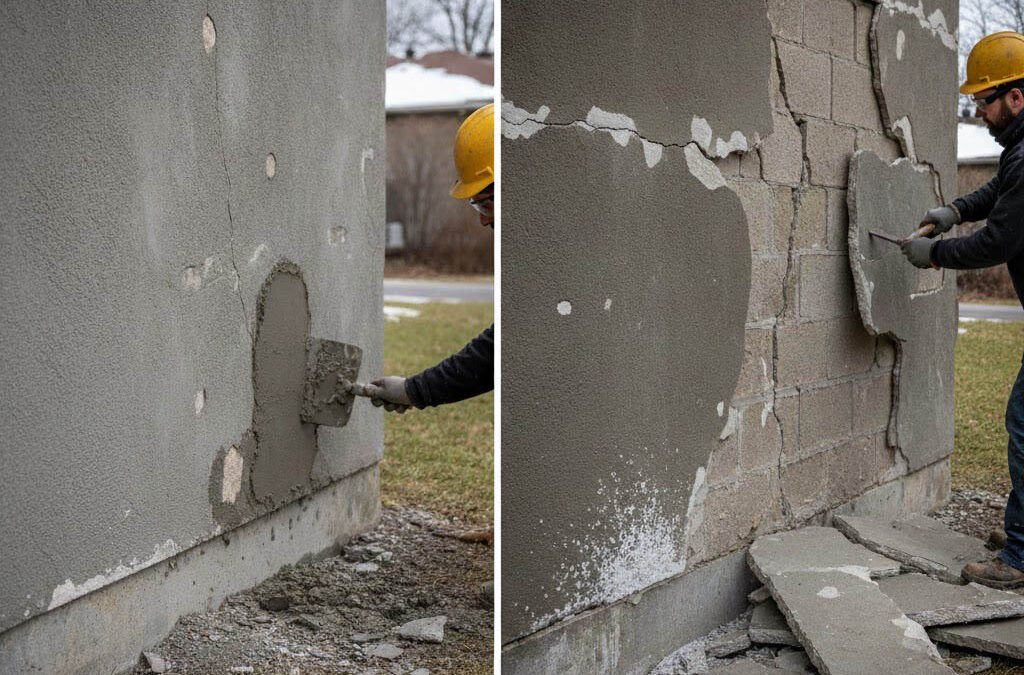
Parging Repair Ottawa: When to Repair vs Replace Your Foundation Coating
If you see cracked, flaking, or falling parging along the base of your exterior walls, you are not alone. Ottawa’s freeze–thaw cycles, road salt, and wet springs are extremely hard on foundation coatings. Many homeowners are unsure whether they can patch the damaged areas or if they need to strip and redo all the parging. Knowing the difference can save you money and help protect your foundation from long-term moisture damage.
This guide explains what parging does, the most common causes of failure in Ottawa, clear signs you can repair vs when you should replace, and what to expect from a professional parging job. If you are worried about your foundation coating, call (613) 454-8186 for a parging inspection and quote.
What Is Parging and Why Does It Matter?
Parging is the thin cement-based coating applied to the exposed portion of your foundation above grade. It is often seen as a cosmetic finish, but it also provides practical benefits: it helps shed water away from the wall surface, covers small surface imperfections in concrete or block, protects masonry from direct exposure to snow, ice, and road salt, and improves curb appeal by giving a clean, uniform finish.
While parging is not a waterproofing system on its own, it is an important part of your home’s overall moisture management. When it fails, the foundation surface is left exposed, which can speed up deterioration—especially in Ottawa’s harsh environment.
Why Parging Fails in Ottawa
Even well-applied parging will eventually show wear, but certain local conditions make failures more frequent and more severe.
- Freeze–thaw cycles: Water gets behind the parging or into small cracks, freezes, and expands, causing the coating to loosen and pop off.
- Road salt & de-icers: Salt from driveways and walkways breaks down the cement and accelerates cracking and flaking.
- Poor surface preparation: New parging applied over dirty, painted, or loose surfaces won’t bond properly and can fail within a few seasons.
- Wrong mix or thickness: Using the wrong mortar or applying it too thick or too thin makes it more prone to cracking.
- Movement in the foundation: Settlement, minor shifting, or active foundation cracks can cause parging to split and separate.
Understanding these causes is the first step in deciding whether a simple repair will last or whether it is smarter to invest in a full replacement.
Signs You Can Repair (Not Replace) Your Parging
In many cases, targeted parging repair is enough. Repair is usually appropriate when the damage is mostly cosmetic, limited in area, and the underlying foundation is still sound.
Repair Is Usually Enough If:
- Damage is localized: Small sections of flaking or hairline cracks in a few spots, not all the way around the house.
- No deep separation: The coating is still bonded tightly in most areas and only the surface layer is affected.
- Foundation is stable: No significant structural cracks or signs of movement behind the parging.
- No active water issues: Basement is dry and there are no obvious leaks at the interior foundation wall.
- Parging is relatively new: A few isolated failures on otherwise solid, recent work.
In these situations, a professional can chip away loose material, properly prep the surface, and apply new parging to blend with the existing coating. Spot repairs are often more budget-friendly and can extend the life of the original parging by many years.
When You Should Replace Your Parging Completely
Sometimes patching is just a band-aid. If most of the parging is failing or the foundation itself has issues, full replacement is usually the smarter long-term option.
Full Replacement Is Recommended If:
- Large sections are failing: Long stretches of wall where parging is loose, hollow when tapped, or already fallen off.
- Multiple layers exist: Old parging coated over repeatedly, leading to thick, poorly bonded layers that keep peeling.
- Deep cracks or bulging: Cracks that run through the parging into the concrete, or bulging areas that suggest moisture behind the coating.
- Ongoing moisture problems: Efflorescence (white salt deposits), damp basement walls, or visible water staining near parged areas.
- Foundation repair is needed: If you are already doing foundation crack repair or waterproofing, it makes sense to redo parging correctly afterward.
With a full replacement, the old coating is removed, the foundation surface is properly cleaned and repaired, and a new parging system is applied using the right materials for Ottawa’s climate. This gives you a fresh, uniform finish and better long-term protection.
How Professional Parging Repair Works
A quality parging job is more than simply spreading fresh mortar on the wall. Professional masons follow a step-by-step process so the new coating bonds properly and stands up to winter conditions.
1. Inspection & Assessment
The first step is a thorough visual inspection of the foundation and existing parging. The contractor will check how far the damage extends, look for structural cracks or movement in the foundation, identify moisture problems or grading issues, and determine whether spot repair or full replacement makes sense.
2. Removing Loose & Failed Material
Any loose, hollow, or delaminated parging must be removed. This is done by hand chipping, scraping, or grinding until the remaining surface is sound and solid. Skipping this step leads to new parging failing prematurely, because it can’t bond to weak material underneath.
3. Surface Cleaning & Preparation
After removal, the foundation surface is cleaned of dust, dirt, and any remaining paint or sealers that would interfere with bonding. Depending on the situation, this may involve wire brushing, washing, or light mechanical cleaning. In some cases, a bonding agent or scratch coat is applied to help the new parging adhere.
4. Repairing Cracks or Voids
If the underlying foundation has minor surface defects, they are filled or patched before the final parging coat is applied. Serious structural cracks may need separate foundation crack repair before parging so that the coating is not applied over an active problem.
5. Applying New Parging
A cement-based parging mix designed for exterior use is applied in one or more thin coats. The mason maintains consistent thickness, works the material into the surface, and finishes it with the desired texture—smooth, semi-smooth, or lightly brushed, depending on your preference and existing finishes around the home.
6. Curing & Protection
Proper curing is essential. In cool or windy conditions, the new parging may need light misting and protection from rapid drying. In colder weather, timing and short-term protection are planned so the material does not freeze during early curing. Once cured, the parging should form a durable, cohesive layer over the foundation.
When Can Parging Be Done in Ottawa’s Climate?
Ideally, parging is done in spring, summer, or early fall when temperatures are consistently above freezing—this gives the best curing conditions. However, with proper planning and cold-weather mixes, some repair work can still be done during milder winter periods when temperatures are above recommended minimums.
Your contractor will look at the forecast, the size of the job, and the specific products being used to decide on timing. If conditions aren’t suitable, they may recommend temporary measures and schedule full parging for the first appropriate window in spring.
Parging Repair vs. Full Foundation Waterproofing
It’s important to understand that parging is a protective coating, not a substitute for proper waterproofing. If your basement is leaking or your foundation walls are consistently damp, you may need more than cosmetic parging.
- Parging: Protects and finishes the above-grade portion of the foundation.
- Waterproofing: Manages water at and below grade using membranes, drainage, and interior systems.
In many Ottawa homes, the best approach is a combination of solutions: exterior or interior basement waterproofing where needed, followed by new parging to protect and finish the exposed portion of the wall.
How Much Does Parging Repair Cost in Ottawa?
Costs depend on the length and height of wall being treated, how much of the old coating must be removed, accessibility, and whether any foundation repair is needed beforehand. While only an on-site quote can give a firm price, here are typical ranges Ottawa homeowners might expect:
- Small spot repairs: For one or two localized areas, often a few hundred dollars.
- Partial wall sections: For longer stretches on one or two sides, typically in the low to mid four-figure range.
- Full perimeter parging: Removing and redoing parging around the entire home generally costs more, but gives a uniform, long-lasting result.
Because parging protects your foundation and improves curb appeal, it is usually one of the higher-value exterior repairs you can make—especially if existing coating is already failing over large areas.
Maintenance Tips to Make New Parging Last Longer
Once your parging has been repaired or replaced, a few simple habits can help it last as long as possible in Ottawa’s climate.
- Keep snow and ice from piling directly against parged walls when you shovel.
- Avoid piling heavily salted snow next to the foundation.
- Maintain proper grading so water drains away from the house, not toward it.
- Clean and maintain gutters and downspouts so they do not overflow against the wall.
- Monitor for small chips or cracks and address them early, before they spread.
These small steps reduce moisture and salt exposure—the two main enemies of parging in Ottawa.
Common Questions About Parging Repair
Can I patch parging myself?
Small cosmetic chips can sometimes be touched up by an experienced DIYer, but matching texture, colour, and ensuring good adhesion can be tricky. For bigger areas or recurring failures, professional repair is recommended so the work lasts.
Does all old parging have to be removed?
Not always. If the existing coating is still solid and well-bonded in some areas, it can often be left in place and tied into new work. If it is loose or hollow across large sections, full removal is the better option.
Will new parging stop my basement from leaking?
Not on its own. Parging is primarily a protective and cosmetic coating above grade. If you have active leaks, talk to a contractor about proper foundation waterproofing and drainage solutions as well.
How long should good parging last?
With proper surface prep, quality materials, and normal exposure, parging can last many years. Harsh freeze–thaw cycles, heavy salt exposure, and foundation movement can shorten its lifespan, which is why inspection and maintenance are important.
Can parging be painted?
Yes, but it is important to use breathable masonry paint or coating. Non-breathable products can trap moisture behind the parging and increase the risk of failure.
Protect Your Ottawa Foundation with Proper Parging
Cracked, flaking, or missing parging is more than a cosmetic issue—it is a sign that your foundation is exposed to the elements. The key decision is whether you can extend the life of your current coating with targeted repair or whether a full replacement will be more cost-effective and durable.
If you are unsure which option is right for your home, the easiest next step is a professional assessment. The team at Ottawa Masonry can inspect your parging, check for underlying foundation issues, and recommend the most sensible solution for your budget and long-term protection.
Need help with parging repair in Ottawa? Call (613) 454-8186 today to schedule an inspection and get a clear, honest recommendation on whether to repair or replace your foundation coating.
Note: All prices mentioned in this article are provided for general reference and informational purposes only. These prices are not fixed and may vary depending on facts, market conditions, location, time, availability, or other relevant factors. Actual prices may change without prior notice. Readers are advised to verify details independently before making any decisions.