
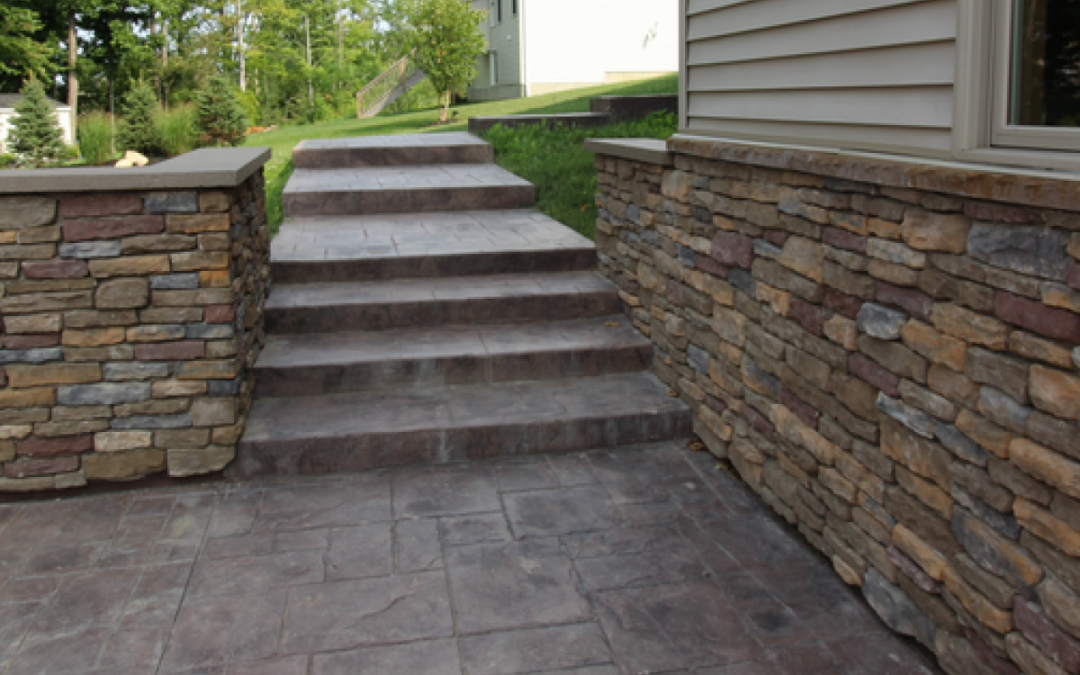
Concrete Driveway Cost in Ottawa: Poured vs. Stamped vs. Exposed Aggregate
💰 Quick Answer
A concrete driveway in Ottawa costs $9–$45 per square foot installed. Plain poured concrete runs $9–$15/sq ft, exposed aggregate $11–$32/sq ft, and stamped concrete $18–$45/sq ft. A typical 500–600 sq ft two-car driveway costs $5,500–$25,000+ depending on the finish.
Prices reflect 2026 Ottawa-area rates. Size, site prep, thickness, reinforcement, and decorative finish all affect final cost.
Your driveway is the first thing visitors see — and in Ottawa, it takes a beating every single year. Between 55+ freeze-thaw cycles, road salt exposure, heavy snowplows, and summer UV, a driveway needs to be built right from the start. A well-installed concrete driveway handles all of it, lasting 25–40 years with proper care and dramatically outperforming asphalt in Ottawa’s conditions.
But not all driveways are created equal. The finish you choose — plain poured, exposed aggregate, or stamped — affects cost, durability, maintenance, and curb appeal in very different ways. Understanding these differences before you commit is essential to getting the best return on what is typically a $5,500–$25,000+ investment.
At Ottawa Masonry, we install concrete driveways in all three finishes — along with stamped concrete, sealing and finishing, and full driveway replacement. This guide breaks down every cost, compares all three finishes, and covers what Ottawa homeowners specifically need to know.
The Three Finishes: Side-by-Side Comparison
Full Driveway Cost Breakdown
What Size Driveway Do You Need?
Single Car
10′ × 24′
~240 sq ft
Double Car
20′ × 24′
~480 sq ft
Double + Parking
24′ × 36′
~864 sq ft
Circular
Varies
+10–20% for curves
Ready for a Driveway That Lasts Decades?
Ottawa Masonry — Custom driveways built for Ottawa’s climate.
📞 (613) 454-8186
Why Ottawa Driveways Need Special Concrete
Standard concrete mixes that work fine in milder climates will fail in Ottawa. Here’s what a properly specified Ottawa driveway requires:
Air-entrained concrete (5–8% air) — Microscopic air bubbles give water room to expand when it freezes inside the concrete. Without proper air entrainment, Ottawa’s 55+ annual freeze-thaw cycles will cause surface scaling and spalling within 2–5 years.
High compressive strength (32 MPa / 4,000+ PSI) — Standard residential concrete is 25 MPa. Ottawa driveways need 32 MPa minimum to handle freeze-thaw stress, vehicle loads, and the impact of snow removal equipment.
Low water-to-cement ratio — A denser mix with less water is more resistant to salt penetration and surface deterioration. Reputable Ottawa contractors control the water-to-cement ratio carefully and never add water at the job site to make the mix easier to pour.
5-inch minimum thickness — While 4 inches is the minimum code requirement, experienced Ottawa contractors pour at 5 inches for driveways to accommodate heavier vehicles, snow equipment, and the additional stress from frost heave.
Proper control joints — Cut every 8–10 feet to control where cracking occurs. Without them, random cracks develop as concrete expands and contracts through Ottawa’s extreme temperature range of -30°C to +35°C. Our concrete services team specs all of these requirements for every pour.
The Installation Process: What to Expect
A professional driveway installation follows a structured timeline. Most two-car driveways take 3–5 days of active work, plus curing time:
Day 1–2
Demolition and excavation — Old driveway removed (if applicable), area excavated to proper depth (typically 12–16 inches total), and subgrade compacted. Soil conditions are evaluated — Ottawa’s Leda clay may require additional excavation depth or geotextile fabric to prevent shifting.
Day 2–3
Sub-base and forms — Compacted granular base (4–8 inches of Granular A or B) installed and graded for proper drainage. Wooden or metal forms set to define edges and ensure correct thickness. Reinforcement (wire mesh or rebar) positioned within the slab.
Day 3–4
Pour day — Ready-mix concrete trucks deliver the specified air-entrained mix. Concrete is placed, screeded level, bull-floated, and finished according to the selected style — broom finish for plain, surface wash for exposed aggregate, or stamping with pattern mats for stamped concrete. Control joints are cut within 6–18 hours.
Day 4–5
Curing and protection — Forms removed, curing compound applied or wet curing begun. The slab must cure for a minimum of 7 days before foot traffic and 28 days before vehicle traffic. In Ottawa, proper curing is critical — concrete that dries too quickly in summer heat or is exposed to early frost will be permanently weakened.
After Curing
Sealing — A penetrating or film-forming sealer is applied to protect against moisture, salt, and UV exposure. First seal at 28–30 days after pour; reapply every 2–3 years for stamped, every 3–5 years for plain or exposed aggregate.
Concrete vs. Asphalt vs. Pavers: Ottawa Comparison
While asphalt costs less upfront, concrete’s longer lifespan and lower maintenance make it the better long-term value for most Ottawa homeowners. Over 30 years, you’ll typically replace an asphalt driveway twice while concrete needs only sealing and minor maintenance. For homes with established landscaping, concrete also avoids the regular sealcoating mess that asphalt requires. Pairing your driveway with matching concrete walkways and steps creates a cohesive look while reducing mobilization costs.
Protecting Your Investment: Driveway Maintenance
Seal Regularly
Apply penetrating sealer every 2–3 years for stamped, 3–5 years for plain or exposed. Sealing prevents salt and moisture from penetrating the surface. Cost: $1–$3/sq ft professional.
Minimize Salt Use
Use calcium chloride or sand instead of sodium chloride (rock salt), especially during the first winter. Never use ammonium-based deicers. Wait at least one full year before applying any deicer to new concrete.
Clean Stains Quickly
Oil, gas, and rust stains should be cleaned promptly to prevent permanent discolouration. Pressure wash at low settings (under 3,000 PSI) annually to remove dirt and organic growth.
Maintain Drainage
Ensure water drains away from the foundation and doesn’t pool on the surface. Standing water accelerates freeze-thaw damage and can undermine the sub-base over time.
Choosing the Right Driveway Contractor in Ottawa
The quality of your driveway depends entirely on the contractor. Poor sub-base preparation, wrong concrete mix, bad timing, or improper finishing can produce a driveway that cracks and scales within two winters. When evaluating contractors, verify they specify air-entrained concrete (32 MPa minimum) and at least 5-inch thickness for Ottawa conditions. Ask about their sub-base preparation process — a quality contractor will excavate, compact, and install proper granular base, not just pour over existing soil. Confirm they hold liability insurance and WSIB coverage, and check references from driveways installed at least 3–5 years ago (new concrete always looks good — it’s year three that tells the truth). The National Building Code of Canada sets the baseline for concrete construction standards, but experienced Ottawa contractors exceed these minimums.
Frequently Asked Questions About Driveways in Ottawa
How much does a concrete driveway cost in Ottawa?
A standard two-car driveway (500–600 sq ft) costs $5,500–$9,000 for plain poured, $6,600–$19,200 for exposed aggregate, and $10,800–$27,000 for stamped concrete. Most Ottawa contractors have a minimum project cost of $5,500 regardless of driveway size, as the equipment, crew, and setup requirements are similar for any pour.
How long does a driveway last in Ottawa?
A properly installed and maintained driveway lasts 25–40 years in Ottawa. The keys to longevity are correct concrete specifications (air-entrained, 32 MPa), proper sub-base, adequate thickness (5 inches), regular sealing, and careful deicer use. Poorly installed driveways may show scaling and cracking within 2–5 years.
Which finish is best for Ottawa winters?
Exposed aggregate provides the best traction in winter conditions thanks to its naturally textured surface. Plain broom-finish concrete also performs well. Stamped concrete can be slippery when wet or icy unless a non-slip additive is mixed into the sealer. All three finishes hold up structurally if the concrete is properly specified and sealed.
When is the best time to pour a driveway in Ottawa?
May through October is the ideal window. Concrete should be placed when temperatures remain above 10°C for at least 7 days after pouring for proper initial curing. Late spring and early fall are the best — summer heat can cause the surface to dry too quickly, requiring extra curing precautions. Avoid pouring if frost is forecast within two weeks.
Do I need a permit for a driveway in Ottawa?
Generally, replacing an existing driveway in the same footprint does not require a permit in Ottawa. However, if you’re widening the driveway, changing the curb cut, or altering drainage patterns, you may need an entrance permit from the City of Ottawa. Your contractor should advise you on local requirements before work begins.
Can a cracked driveway be repaired?
Hairline cracks and minor surface damage can be filled with epoxy or polyurethane compounds. Concrete resurfacing ($3–$10/sq ft) can restore a deteriorating surface without full replacement. However, if the sub-base has failed, the slab has settled unevenly, or cracks are extensive, full replacement is typically more cost-effective than repeated patching.
Is a heated driveway worth it in Ottawa?
Heated driveways add $12–$25/sq ft to installation costs plus ongoing energy expenses ($150–$400/winter for electric systems). They eliminate shovelling and salt damage — a significant benefit for accessibility or steep driveways. The upfront cost is substantial but some Ottawa homeowners consider it worthwhile for convenience, safety, and protecting the concrete from salt damage.
How soon can I drive on new concrete?
Wait a minimum of 7 days for foot traffic and 28 days before driving on new concrete. Concrete reaches approximately 70% of its design strength at 7 days and near full strength at 28 days. Driving on it too early can cause surface damage and cracking that is permanent. Patience during curing is the single most important thing you can do to protect your investment.
Does a new driveway add home value?
Yes — a well-maintained driveway significantly improves curb appeal and resale value. Stamped concrete adds the most perceived value (80–100% return on investment), while even a plain poured driveway returns 50–70% of its cost in added home value. In Ottawa’s competitive real estate market, a crumbling driveway can deter buyers and reduce offers.
Can I resurface my driveway instead of replacing it?
If the sub-base is solid and the slab isn’t severely cracked or settled, resurfacing is a viable option at $3–$10/sq ft. A concrete overlay or microtopping restores the surface appearance without full demolition. However, resurfacing won’t fix structural issues like sub-base failure or significant settling — in those cases, full replacement is the better long-term investment.
Your Driveway. Built for Ottawa. Built to Last.
Ottawa Masonry — Plain, exposed aggregate, and stamped driveways.
Serving Ottawa, Kanata, Barrhaven, Orleans, Nepean, Gatineau & surrounding areas.
📞 (613) 454-8186